Amazon Prime in Ireland: A Simple Question Raises Bigger Concerns about Big Tech Fairness to Irish Consumers

DUBLIN, Ireland (March 30, 2026) — I am an Amazon Prime subscriber living in Ireland. My wife and I live at the same address and, like many couples, we each have our own Amazon accounts.
So I did what Amazon encourages: I set up an “Amazon Household.”
In the United States and the United Kingdom, that feature allows two adults to share core Prime benefits — including delivery and Prime Video — across their accounts. It is presented as a household-level feature, not just a convenience for organizing profiles.
What I wanted to know was simple: does that work the same way in Ireland?
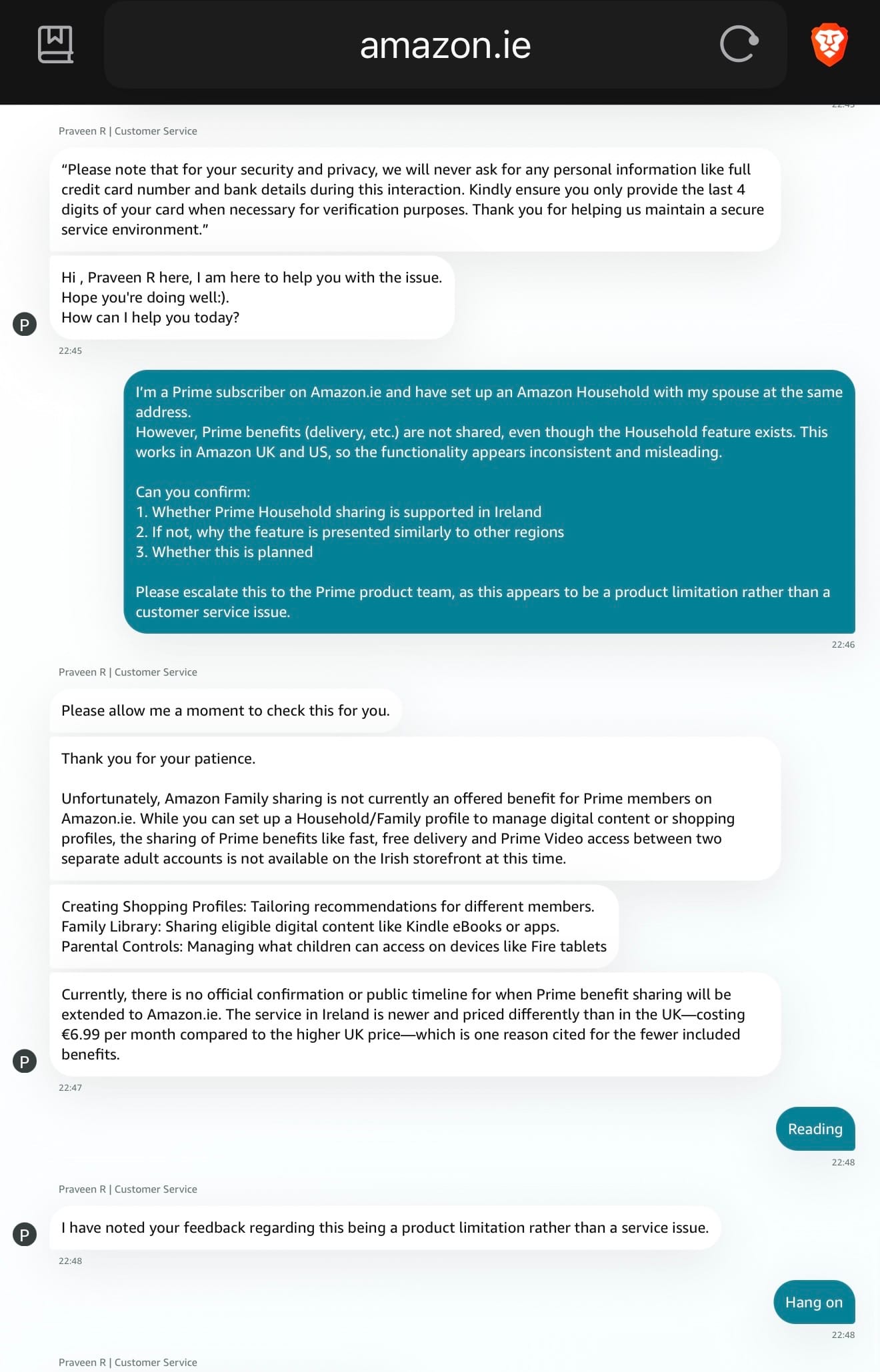
I contacted Amazon customer service and asked directly.
The answer was no.
“Prime benefit sharing is not currently an offered benefit for Prime members on Amazon.ie,” the representative told me. That includes free delivery and Prime Video access between two adult accounts.
There is also, according to Amazon, “no official confirmation or public timeline” for when that might change.
At that point, the issue shifted.
This was no longer about a missing feature. It was about how the feature is presented.
Amazon offers the Household feature in Ireland in a way that appears similar to other regions where Prime benefits are shared. But in practice, those benefits are not shared here.
I pressed the point.
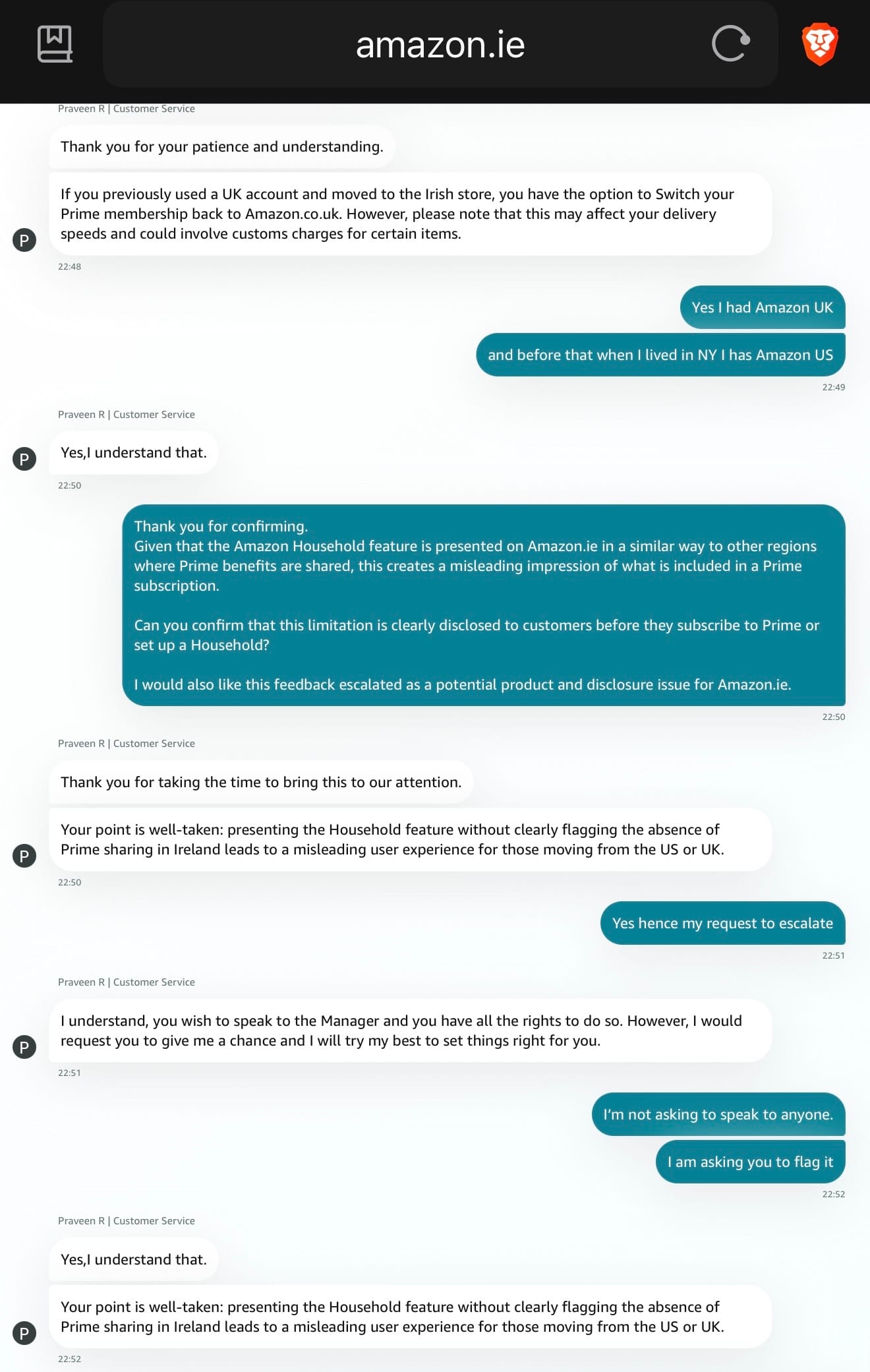
If a feature is presented the same way across markets, but functions differently, is that clearly disclosed to customers before they subscribe or set it up?
The representative did not dispute the concern. In fact, the response was notable.
“Your point is well-taken,” the representative said, adding that presenting the Household feature without clearly flagging the absence of Prime sharing in Ireland “leads to a misleading user experience for those moving from the US or UK.”
That acknowledgment matters.
It confirms not only the limitation, but how it may be perceived by customers.
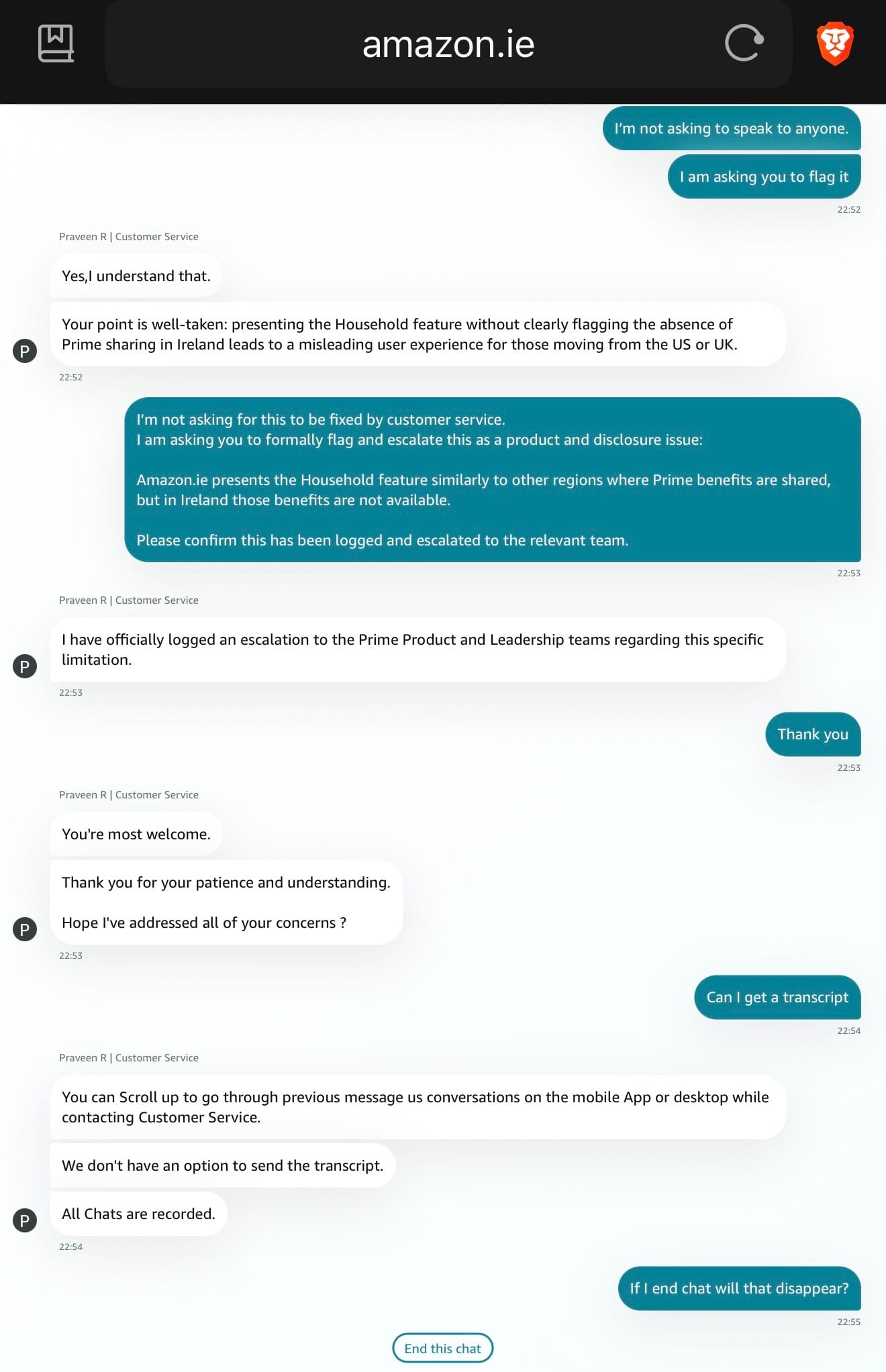
I then asked for the issue to be formally escalated — not as a customer service problem, but as a product and disclosure issue.
“I have officially logged an escalation to the Prime Product and Leadership teams regarding this specific limitation,” the representative replied.
At that point, I had what I needed: a clear answer, a documented acknowledgment, and confirmation that the issue had been escalated internally.
So I took the next step.
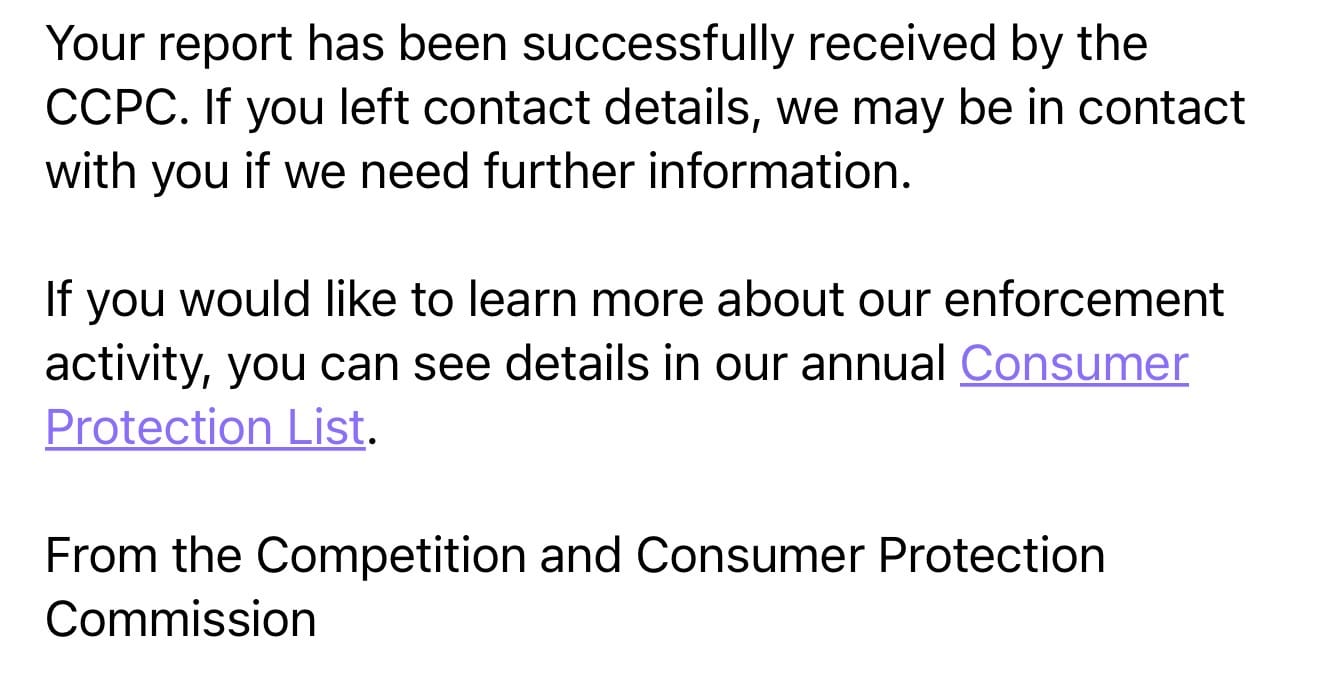
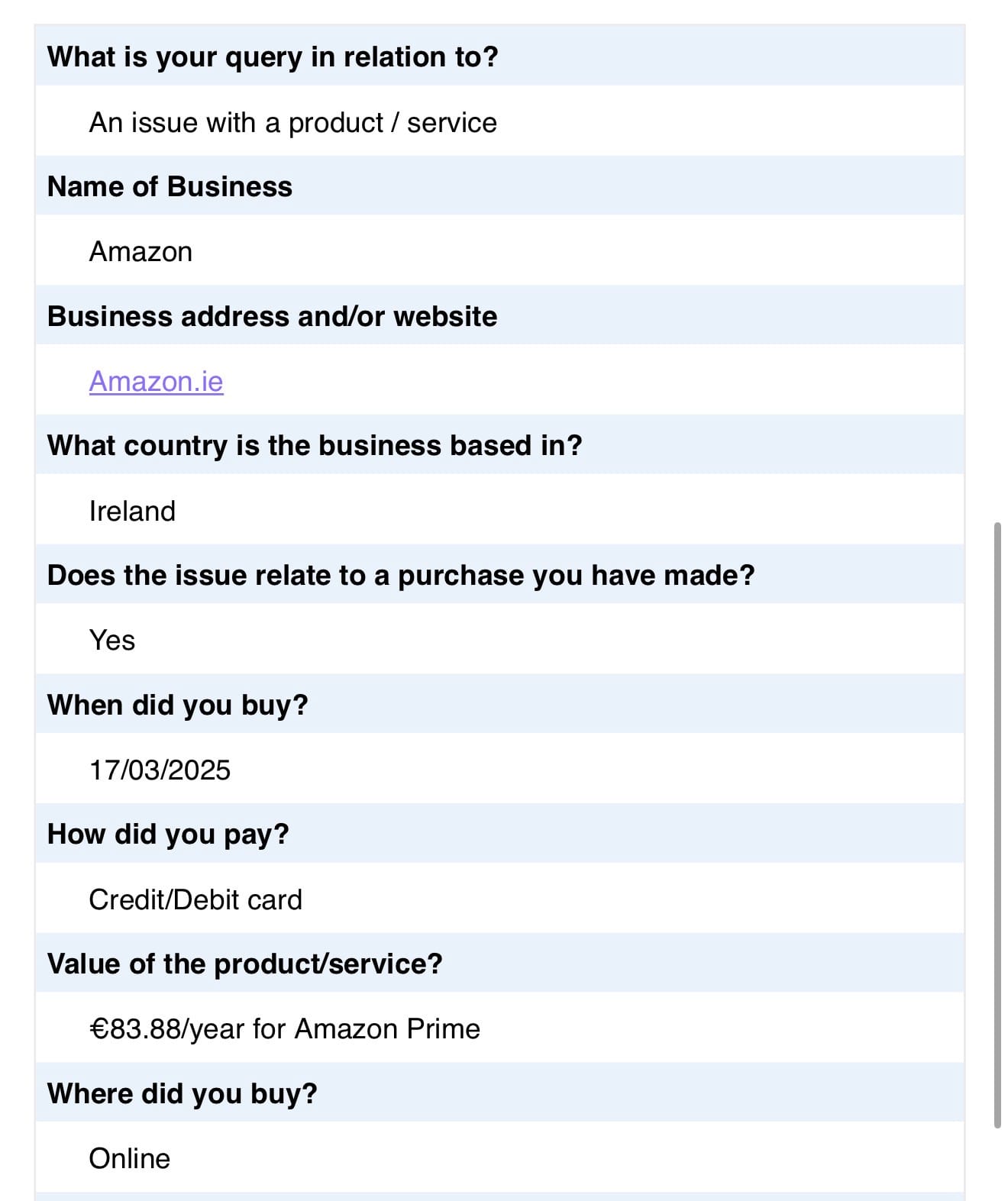
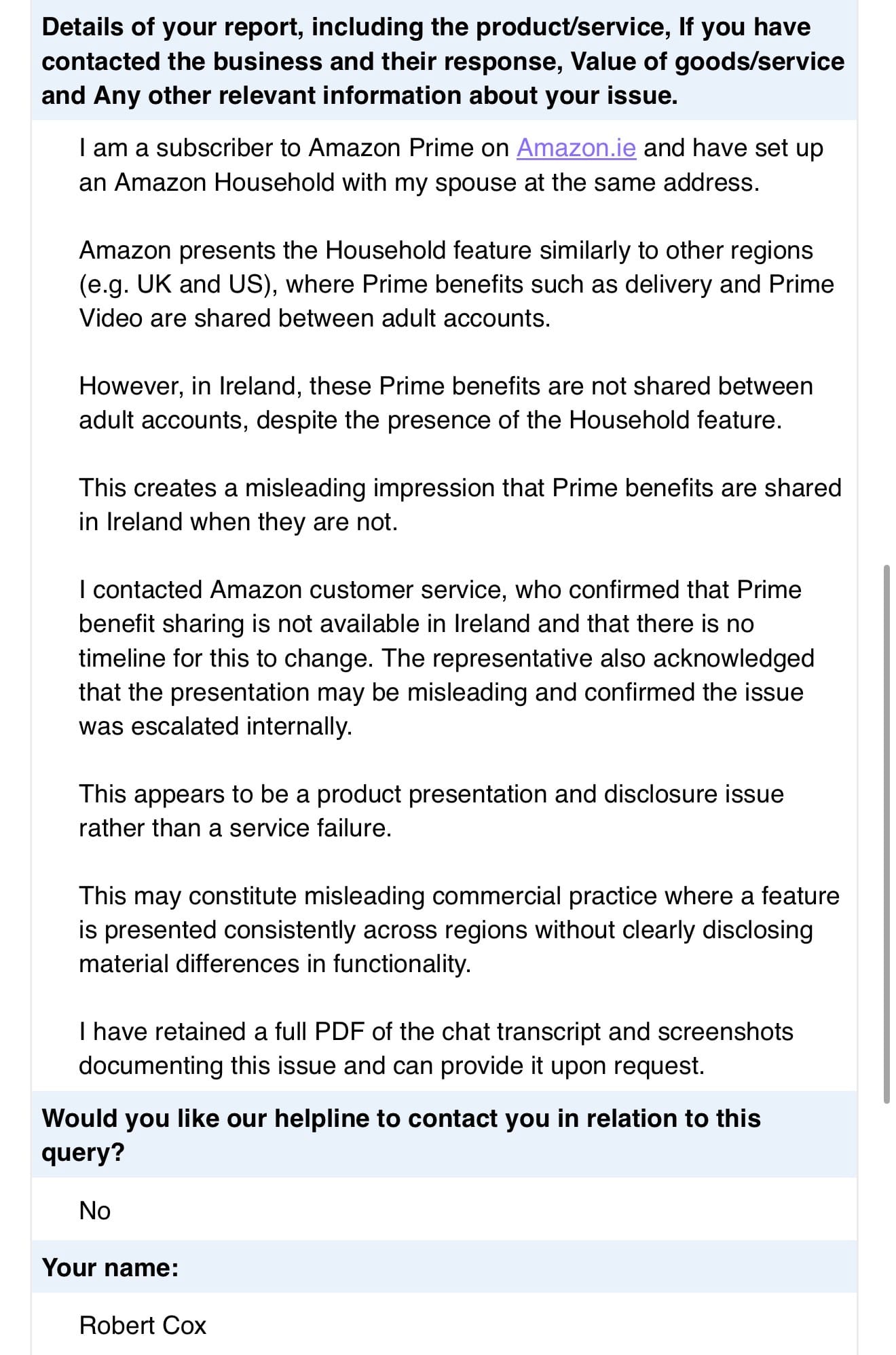
I filed a report with the Competition and Consumer Protection Commission, outlining the issue and including the substance of my exchange with Amazon.
The CCPC does not resolve individual complaints. It collects reports to identify patterns — particularly where there may be misleading commercial practices.
That distinction is important. This is not about whether Amazon can offer different features in different markets. It can.
The question is whether those differences are clearly communicated.
If a feature is presented in a way that suggests parity with other regions, but key functionality is missing, that is not just a product decision. It is a disclosure issue.
For other consumers, the path is straightforward.
Ask the question. Get the answer in writing. Document everything.
Then, if necessary, escalate.
There is a tendency to accept small inconsistencies in digital services — to assume they are quirks of geography or pricing. But those inconsistencies add up, especially when they affect how a paid service is understood.
Markets depend on clear information. When that clarity is missing, the only real check is the consumer who notices and pushes back.
That is what I did here.
And now I wait.
MY EXCHANGE WITH AMAZON.IE
MY REPORT TO CCPC.IE