NYC Enrollment Report Exposes What’s Missing From New Rochelle’s Vision 2030

DUBLIN, IRELAND (October 30, 2026) — Since the New Rochelle Board of Education re-launched its Vision 2030 initiative in September, I have repeatedly raised a question that I believe needs to be answered before the district begins considering major changes to school configurations, educational programs or facilities: What problem is the Board of Education trying to solve?
I have deliberately avoided taking positions on the merits of the individual proposals under consideration. Before debating solutions, I want to know what the board believes is wrong with the district’s existing arrangements, what evidence supports that assessment and what measurable improvements it expects to achieve. I have suggested that the board begin with one of the most consequential developments facing public education: the long-term decline in student enrollment.
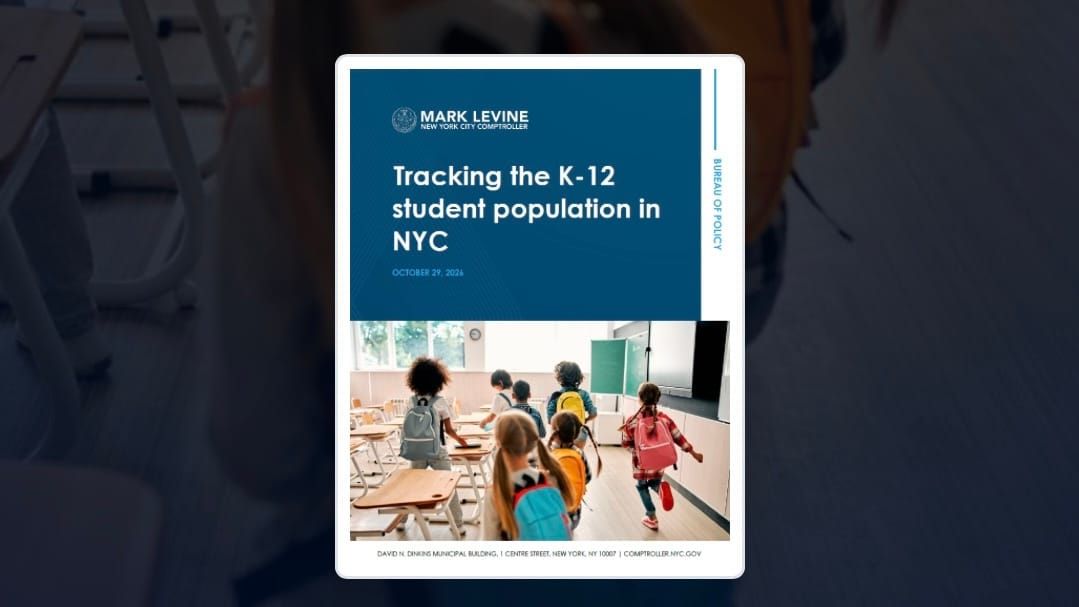
On Thursday, October 29, New York City Comptroller Mark Levine released a report that provides an excellent example of the kind of analysis New Rochelle residents should expect from their own school district.
The report, Tracking the K-12 Student Population in NYC, examines historical enrollment, demographic changes, the declining school-age population, student movement between educational systems and projections extending nearly a decade into the future. It also documents how the needs of the remaining student population are changing, with implications for the resources required to educate those children.
I encourage every New Rochelle resident interested in the future of the public schools to spend a few minutes reviewing the report, particularly its executive summary, key findings and charts. Not because New Rochelle is New York City, or because the two school systems necessarily face identical circumstances, but because the report demonstrates what serious examination of the future of public education can look like.