Jeanne Claudet Forbes: The Woman Who Preserved New Rochelle’s Earliest History

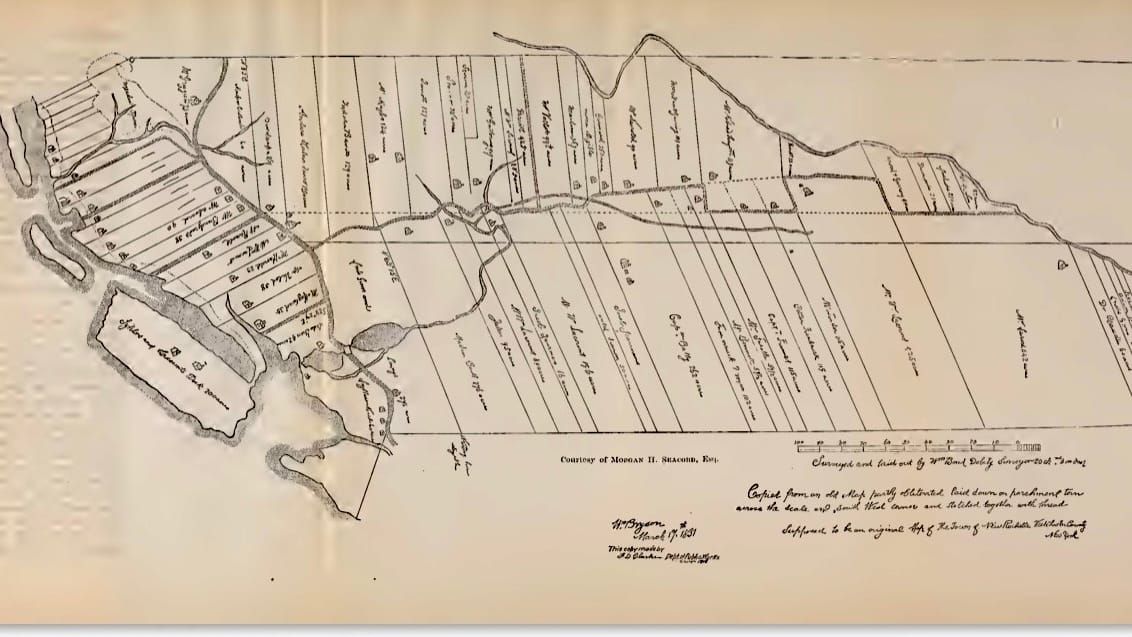
DUBLIN, IRELAND (October 25, 2026) — More than a century ago, a New Rochelle woman undertook the painstaking task of deciphering, transcribing and translating the town’s oldest surviving municipal records, preserving documents that tell the story of the community’s earliest years.
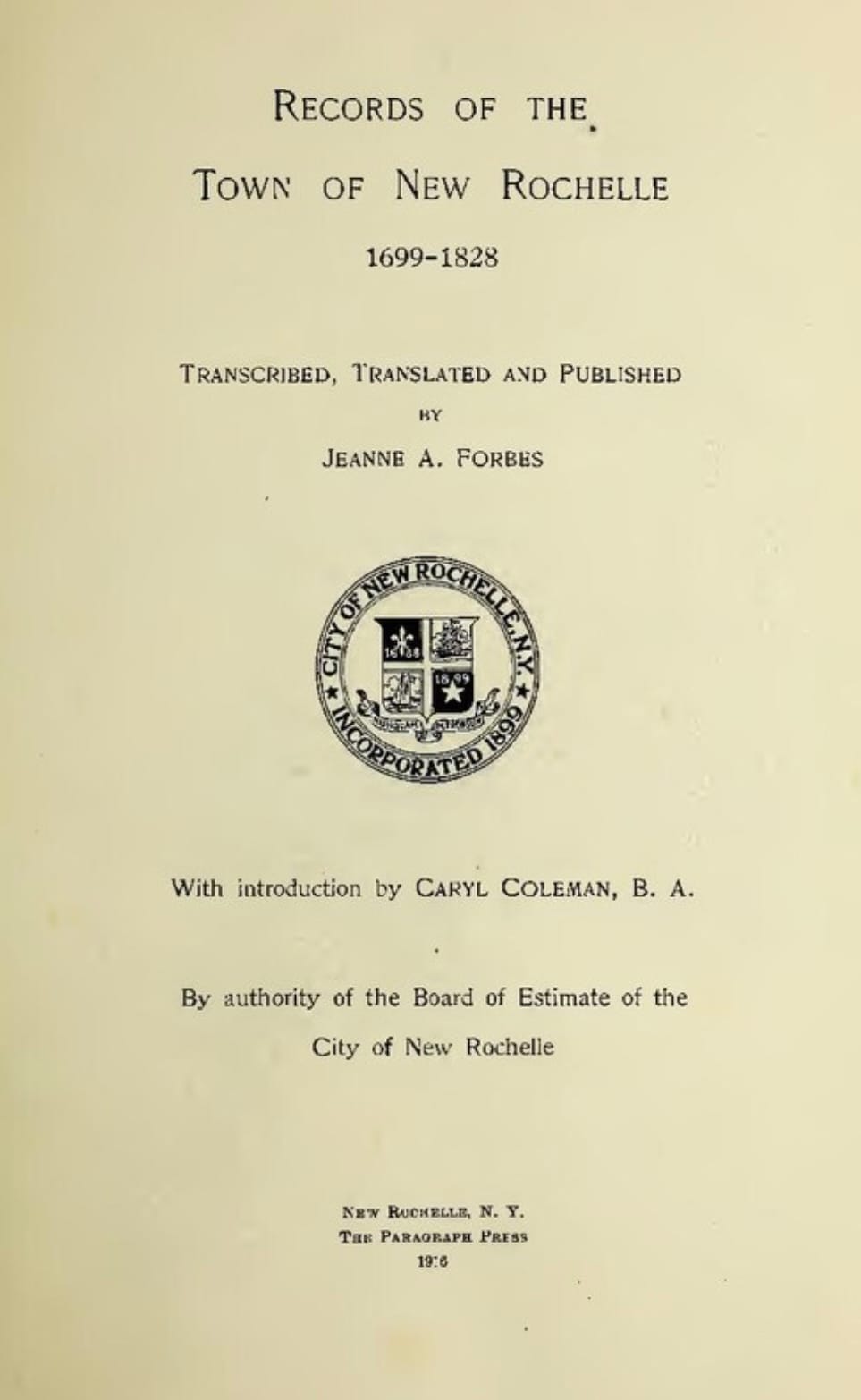
Her name was Jeanne Claudet Forbes, and in 1916 she published Records of the Town of New Rochelle, 1699–1828, a substantial volume containing more than a century of municipal records, including documents dating to the early years of the French Huguenot settlement. Published with the authorization of New Rochelle’s city government, the book remains an important resource for anyone interested in the community’s origins.
More than 100 years later, her work is still available to the public. A copy is held in the New Rochelle Public Library’s Local History Collection, and a complete digitized edition can be read online for free.
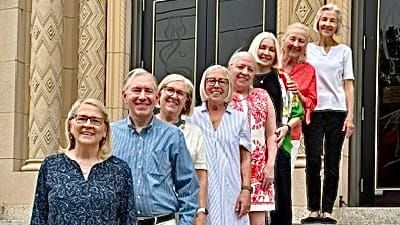
I learned about Jeanne Claudet Forbes through an email from James C. “Jim” Forbes Jr. of Atlanta, Georgia, whose family gathered in New Rochelle for a reunion in July 2026. Jim had contacted me about his family’s connections to the city’s history, particularly its newspapers. His grandmother’s work translating the early Huguenot records was mentioned almost in passing.
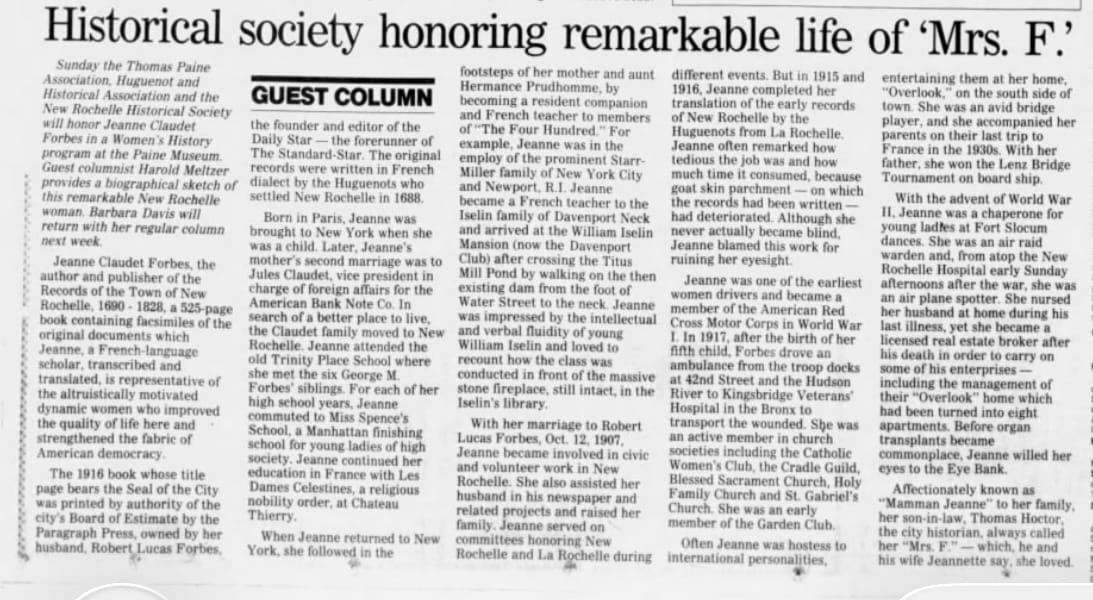
As I researched the family, however, Jeanne’s contribution stood out. I contacted Barbara Davis, the Westchester County historian and former New Rochelle city historian, who confirmed the family’s historical background and provided a March 23, 1995, Standard-Star article about Jeanne’s life. Written by Harold Meltzer under the headline “Historical Society Honoring Remarkable Life of ‘Mrs. F’,” the article supplied much of the biographical information that follows.
From Paris to New Rochelle
Jeanne was born in Paris, France, and came to New York as a child. Her mother’s second husband, Jules Claudet, was vice president in charge of foreign affairs for the American Bank Note Co., and the family eventually settled in New Rochelle.
She attended the old Trinity Place School in New Rochelle and later Miss Spence’s School in Manhattan. Her education also took her back to France, where she studied with Les Dames Celestines, a religious order, at Château de Tilery. Her background and education gave her a command of French that would later prove particularly valuable to her adopted hometown.
During her school years in New Rochelle, Jeanne became acquainted with the six sons of George Morris Forbes, editor of the New Rochelle Pioneer. One of those sons, Robert Lucas Forbes, would become her husband. They married on Oct. 12, 1897.
Robert founded the New Rochelle Daily Star, a predecessor of the Standard-Star, and established himself in newspaper publishing and real estate. Jeanne assisted with his publishing activities while raising their family, but she also developed interests of her own in local history, community organizations and public service.
Those interests eventually led her to undertake a project that would preserve a substantial portion of New Rochelle’s earliest written history.
Preserving the Town’s Original Records
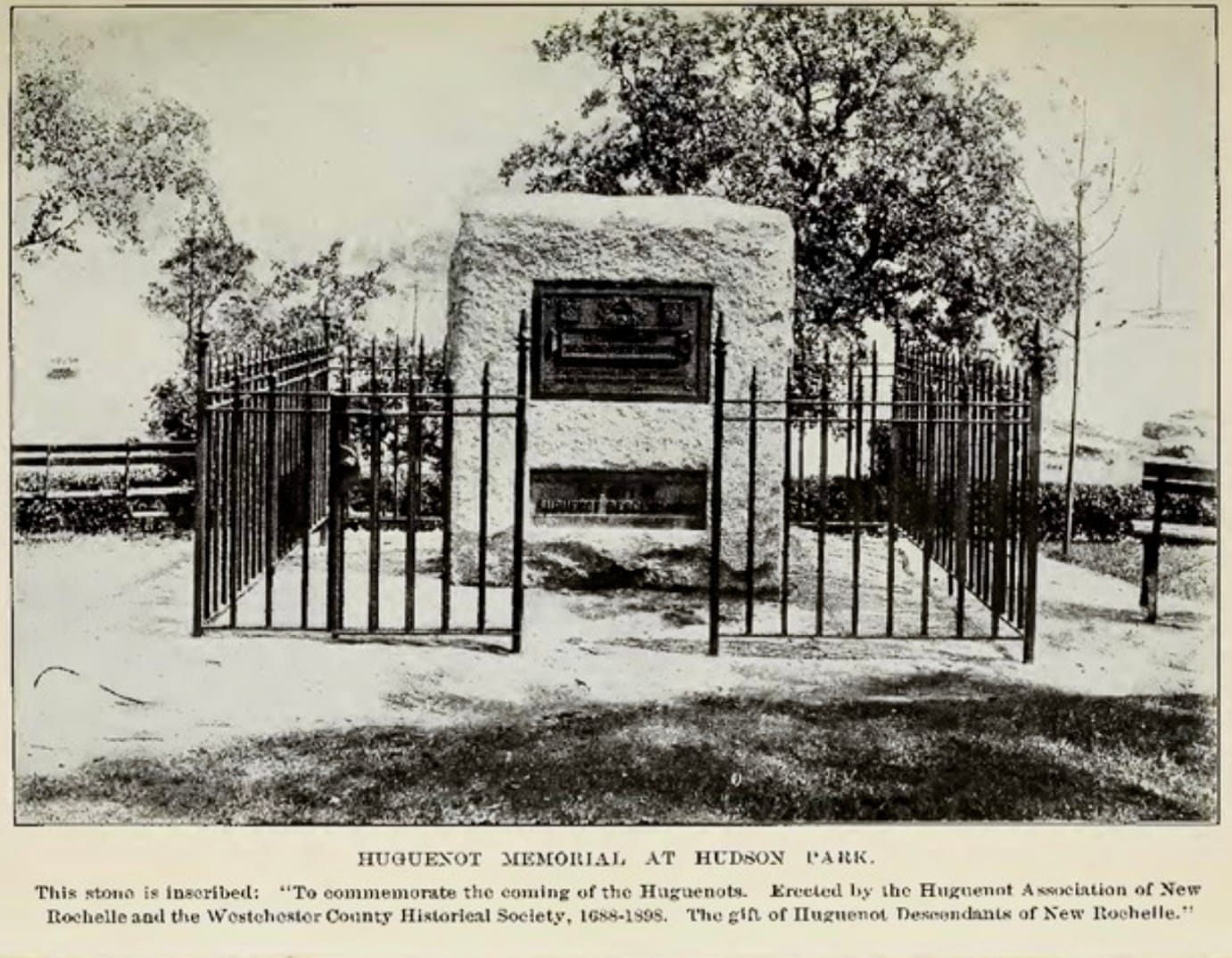
New Rochelle was established in 1688 by French Huguenots who had fled religious persecution in Europe. The town’s surviving early records were handwritten, sometimes in French and sometimes in English, presenting considerable challenges to anyone attempting to study them generations later.
Jeanne took on the task of transcribing and translating those documents, producing a volume that was published in New Rochelle in 1916 by Paragraph Press, the publishing business associated with her husband.
The title page identifies Jeanne A. Forbes as the person who transcribed, translated and published the records. It also states that the book was issued under the authority of the Board of Estimate of the City of New Rochelle, with an introduction by Caryl Coleman.
The original volume includes photographs of handwritten documents, printed transcriptions and English translations where necessary. The documents cover subjects ranging from land ownership and town government to roads, public responsibilities and the everyday administration of the early settlement.
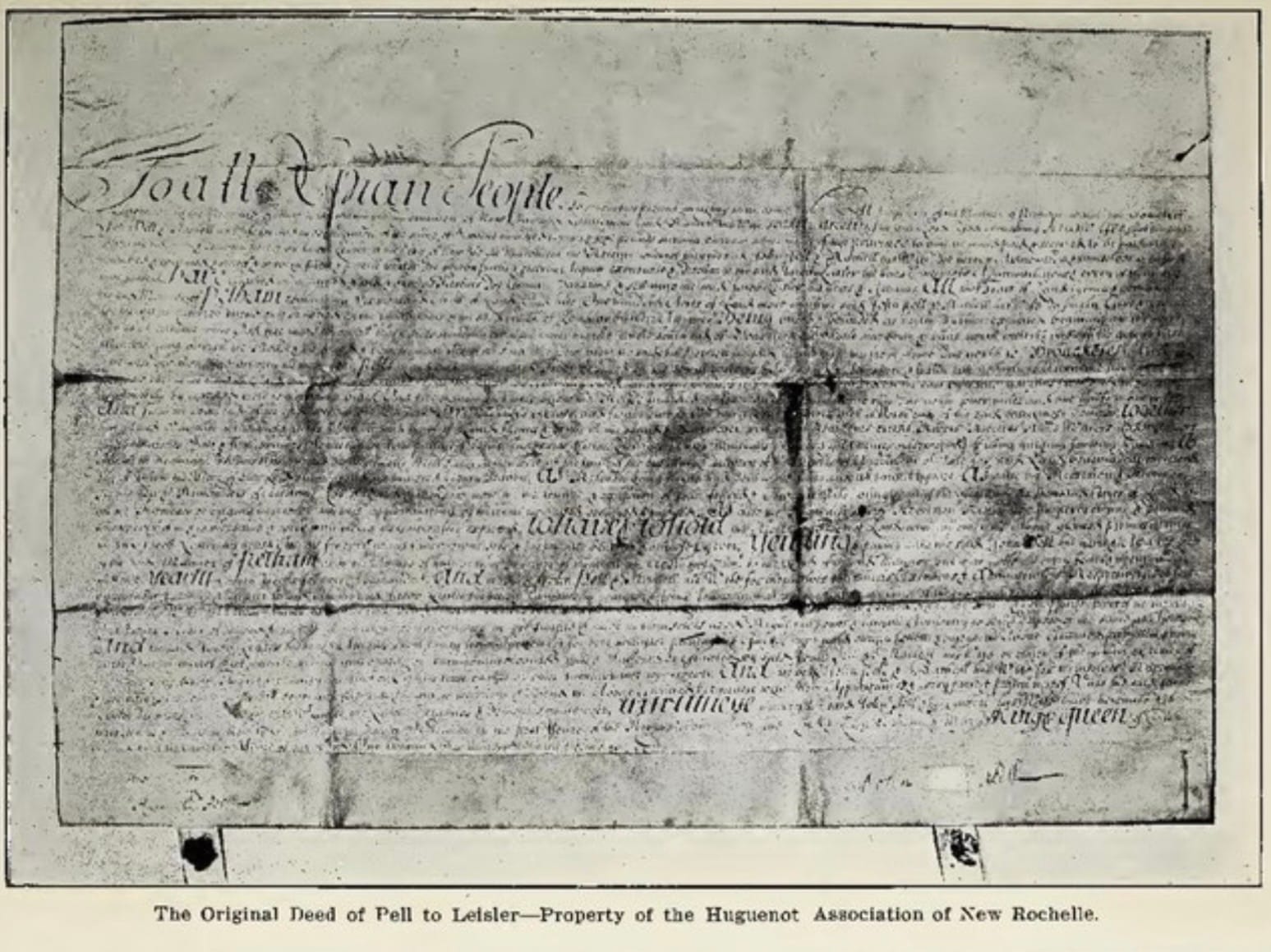
Among the historical documents reproduced in the opening pages is the original Pell deed associated with the land on which New Rochelle was established. The collection also begins with a record of a general town meeting held Dec. 2, 1699, apparently the earliest recorded town meeting in the surviving records.
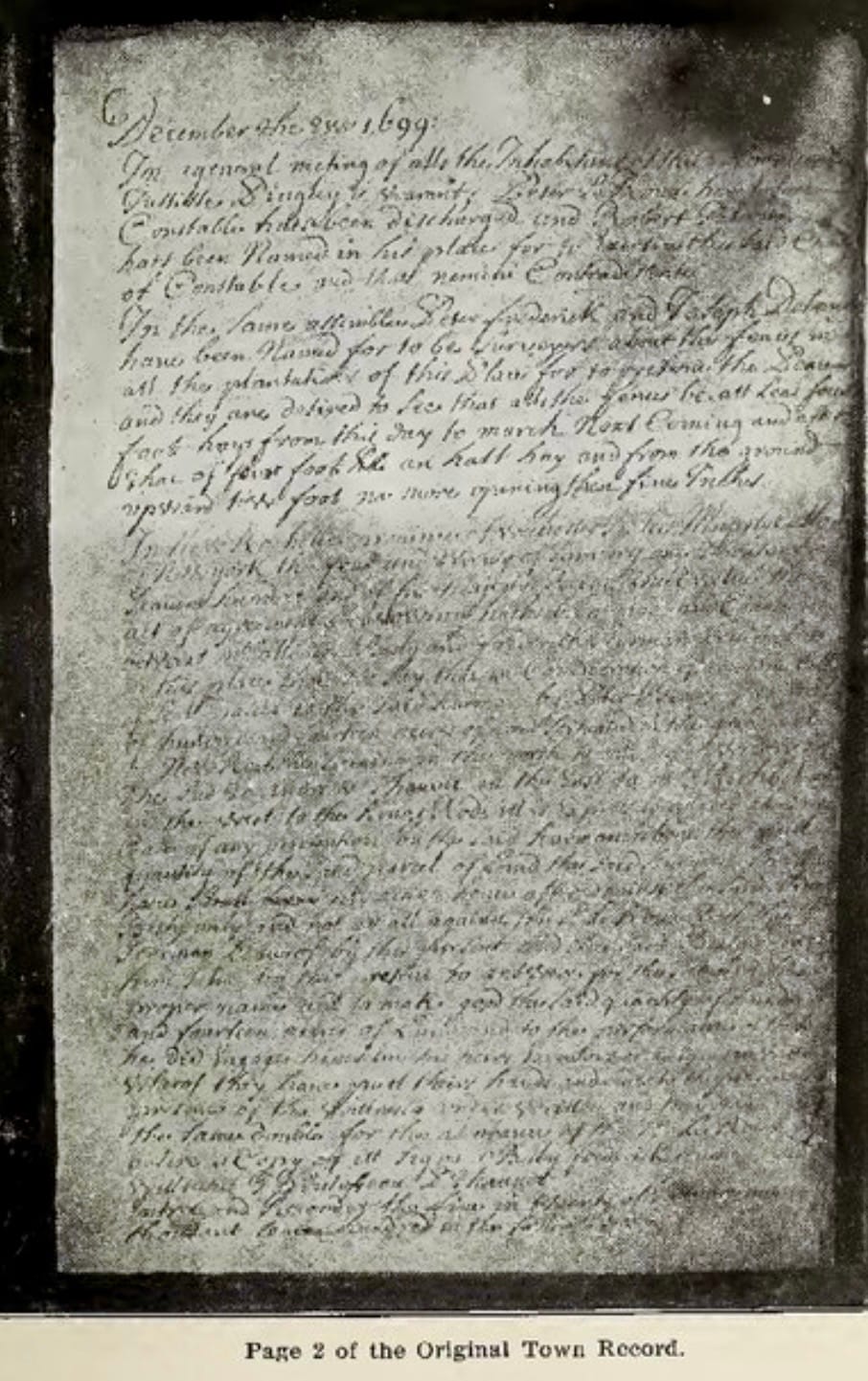
That meeting offers a revealing glimpse into municipal government at the end of the 17th century. Residents dealt with the appointment of a constable and officials responsible for inspecting fences, matters that may seem mundane today but were essential to maintaining order and settling responsibilities in a small colonial community.
One of the most striking aspects of the book is seeing the original handwriting reproduced alongside a readable transcription. The faded, densely written documents make clear why translating and preserving them required such careful work.
The 1995 Standard-Star article described the difficult condition of the original parchment and reported that Jeanne believed the demanding work had damaged her eyesight, although she did not become blind.
A Publication Authorized by the City
Jeanne’s book was more than a privately assembled collection of historical documents. It carried the authorization of New Rochelle’s municipal government and included a formal certification from the city clerk.
In the opening pages, Jeanne certified that her transcription was a complete and accurate copy of the original records and that the translations faithfully represented the original documents.
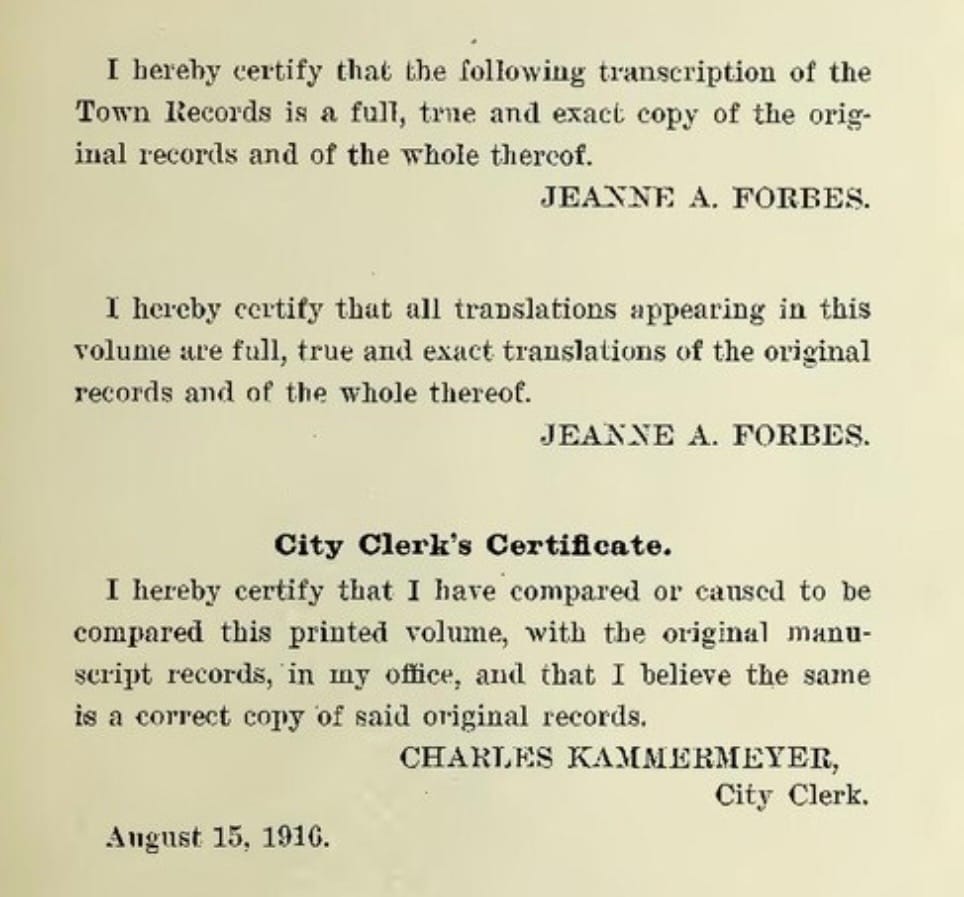
Below her certifications appears a statement from City Clerk Charles Kammermeyer, dated Aug. 15, 1916, saying that he had compared, or caused to be compared, the printed volume with the original manuscripts in his office and believed it to be an accurate copy.
The distinction matters. Jeanne’s work was not simply a historical interpretation written a century ago. It was an effort to reproduce the original municipal records in an accessible, published form, with the city government’s authorization and review.
Coleman’s introduction, dated Aug. 5, 1916, also explains why the project was considered important at the time. He praised the transcription and translations as accurate and unabridged and argued that the original documents could help readers better understand the daily lives, beliefs and civic institutions of New Rochelle’s earliest settlers.
The volume gives modern readers an opportunity to examine those same records without having to decipher centuries-old handwriting or translate passages from French.
A Life Beyond Historical Research
Although her work on the town records is perhaps Jeanne’s most enduring contribution, the 1995 Standard-Star article describes a woman whose interests and activities extended far beyond historical scholarship.
During World War I, she joined the American Red Cross Motor Corps and drove an ambulance transporting wounded soldiers arriving at New York’s docks to Kingsbridge Veterans Hospital in the Bronx. The article described her as among the earliest women automobile drivers.
During World War II, she volunteered as a chaperone for young women attending dances at Fort Slocum and participated in other activities supporting the war effort. She was also active in New Rochelle’s civic, charitable and cultural organizations, including the Garden Club.
After her husband’s death, Jeanne became a licensed real estate broker and continued managing some of the family’s business interests. These included the family’s Overlook residence, which had been converted into apartments. She died in 1964.
Her family called her “Mamman Jeanne.” Her son-in-law, Thomas Hoctor, who served as New Rochelle’s official city historian for nearly half a century, called her “Mrs. F.,” the nickname used in the headline of the 1995 newspaper profile.
That article was published in connection with a Women’s History Month program organized by the Thomas Paine Association, the Huguenot and Historical Association and the New Rochelle Historical Society to recognize her contributions to the community.
The recognition was fitting for someone whose work had helped preserve the records upon which much of New Rochelle’s early history could be studied.
Where to Read Jeanne Forbes’ Book
One of the pleasures of researching Jeanne Claudet Forbes was discovering that her book has survived and remains readily accessible.
The New Rochelle Public Library lists Records of the Town of New Rochelle, 1699–1828 in its Local History Collection under government records. Its catalog reference is LH 974.728 N425t. The library’s local history materials are available for public research, including in the E.L. Doctorow Local History Room on the library’s second floor.
Readers can also examine the entire book online without visiting the library. A digitized copy of the original 1916 edition, including the photographs of the manuscripts, introduction, transcriptions and translations, is available through Wikimedia Commons and the Internet Archive.
Read the complete book here.
The book offers far more than dates and names. Its records reveal how New Rochelle’s earliest residents organized their local government, managed property, established roads and addressed the practical problems of life in a new settlement.
There is something particularly satisfying about being able to open a book published in 1916 and read a record of a town meeting held in 1699, knowing that it was made accessible through the efforts of a New Rochelle woman who devoted herself to preserving those documents.
Jim Forbes’ original email was about a family reunion, and I had not expected it to lead to a separate article about his grandmother. Thanks to his introduction and the additional historical material supplied by Barbara Davis, I came to appreciate an accomplishment that deserved recognition in its own right.
Jeanne Claudet Forbes helped ensure that New Rochelle’s earliest municipal records would remain accessible to generations of residents and historians who came after her. More than a century after she completed that work, anyone with an internet connection can open her book and discover the documents she worked so carefully to preserve.
This article was prepared with the assistance of AI tools under the direction and editing of Robert Cox.
Have information about this story? Email robertcox@talkofthesound (preferred) or contact via WhatsApp: +353 089 972 0669.