OP-ED: New York's Housing Crisis Won't Be Solved With Slogans
by Anthony Hammel
NEW ROCHELLE, NY (June 12, 2026) — Governor Kathy Hochul's "Let Them Build" agenda makes for a compelling headline. Who wouldn't support cutting red tape, building more housing, and lowering costs?
At first glance, the proposal suggests that bureaucracy is the primary obstacle standing between New Yorkers and the housing they desperately need. But the reality is far more complex. In many places, the challenge is no longer obtaining approvals—it is creating the economic conditions that make development possible.
The problem is that in many of the communities best positioned to help solve New York State's housing shortage, much of that work has already been done. The Hochul Administration's plan is rooted in the idea that speeding up development by removing red tape will improve affordability. Reducing unnecessary barriers can help, but as demand continues to grow, the only sustainable way to influence prices is by increasing supply. And supply has dwindled because feasibility itself has become the obstacle.
I write this not as a politician or policy analyst, but as someone who has spent years as a commercial multifamily real estate developer, building and operating housing in New York State. I have experienced both sides of the approval process firsthand.
Before New Rochelle adopted its Downtown Overlay Zone in 2015, development was often marked by uncertainty. Projects moved through a maze of environmental reviews, discretionary approvals, negotiations, and shifting expectations. Developers struggled to estimate timelines and costs. Lenders hesitated in the face of unpredictability. Communities became frustrated by lengthy processes with no clear end in sight.
Recognizing those challenges, New Rochelle undertook an ambitious comprehensive planning effort. Residents participated in public meetings. Environmental impacts were studied. Infrastructure capacity was evaluated. The community made deliberate decisions about where growth should occur and what that growth should look like.
The result was the Downtown Overlay Zone.
The DOZ did not eliminate environmental protections. It strengthened them by evaluating impacts comprehensively rather than repeating the same analysis project after project. Developers proposing buildings consistent with the adopted plan could rely upon the extensive work that had already been completed. Communities retained control over their vision while creating a more transparent and predictable process.
In many respects, New Rochelle became a model for how thoughtful planning can accommodate growth without sacrificing environmental stewardship.
That is why Albany's "Let Them Build" agenda changes relatively little in markets like ours. The communities capable of delivering meaningful housing production have already embraced the type of planning framework the state now promotes.
To be clear, that is not true everywhere. In parts of New York State, outdated zoning, lengthy approval processes, and permitting uncertainty remain significant barriers to housing production. Streamlining those systems may prove beneficial. But New York's housing markets are not monolithic, and the barriers to development differ substantially from one community to another.
There is another reality often overlooked in the statewide conversation: not all communities are equally positioned to address the housing shortage.
New York City remains the economic hub of the region and will continue to play an essential role in creating housing. Yet development there is among the most expensive in the nation. Land costs, construction costs, regulatory complexity, and extended timelines make delivering new housing extraordinarily difficult. The greatest opportunity for meaningful growth may lie in the spoke markets surrounding the city.
Communities such as New Rochelle, White Plains, Yonkers, and other transit-oriented municipalities already possess the characteristics necessary to absorb growth. They have rail access, utility networks, employment connections, market demand, and planning frameworks specifically designed to accommodate additional density. Importantly, they can increase housing supply without overwhelming existing infrastructure because those impacts were evaluated through comprehensive planning.
By contrast, smaller communities with limited sewer capacity, constrained transportation systems, and weaker demand cannot realistically generate the housing volume necessary to move the needle statewide.
If New York State is serious about increasing housing supply, it must confront the barrier that matters more than any permitting timeline: feasibility.
Financing is at the center of that challenge, but it is not the only factor. Construction costs, labor expenses, insurance premiums, property taxes and operating costs have all increased dramatically. Higher borrowing costs compound those pressures and can turn otherwise viable projects into infeasible ones.
The economics of housing development have changed profoundly over the past several years. The Federal Reserve's "higher for longer" interest rate strategy, designed to combat inflation, has had unintended consequences for housing production. Projects that were feasible when borrowing costs were 3% or 4% often become impossible when commercial financing approaches 10%.
The math simply stops working.
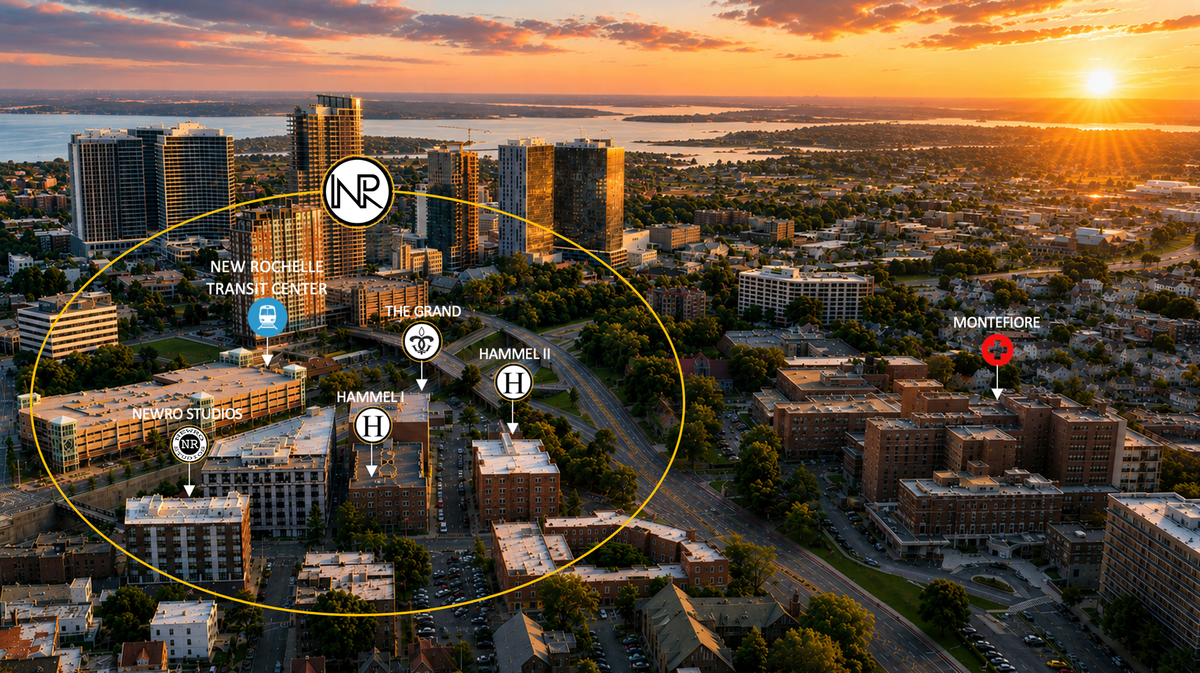
I witnessed this firsthand while developing The Grand in New Rochelle. The construction loan was originated with a variable interest rate of approximately 6%, and the lender established an interest reserve intended to cover debt service throughout the two-year construction period. As interest rates climbed to roughly 9.5%, that reserve was exhausted six months before maturity. The sponsor was suddenly required to replenish the shortfall at a cost of approximately $150,000 per month.
That is not a rounding error. It fundamentally changes a project's economics.
Had those borrowing costs existed at the outset, we would not have pursued the development. As a direct result of today's financing environment, our organization has paused future development plans until conditions improve. Every developer making the same decision means fewer apartments delivered to the market and a further restriction on supply.
Developers are not charities, nor should they be expected to operate at a loss. Lenders require adequate debt coverage. Investors expect reasonable returns commensurate with risk. When financing costs rise sharply while every other input cost increases as well, projects stall—not because they lack approvals, but because they lack economic feasibility.
The answer lies in public-private partnership.
Government can help bridge feasibility gaps through targeted tax incentives, infrastructure investments, and access to lower-cost financing. The private sector brings capital, expertise, efficiency, and the ability to execute projects at scale. Neither side can solve this crisis alone.
New York State's housing shortage will not be solved by slogans. It will be solved when policymakers recognize that planning without capital produces plans, not homes.
We already know where many of these homes should be built. We have communities that have said yes. What we need now are the economic conditions and partnerships necessary to turn those approvals into cranes, construction sites, and ultimately, keys in the hands of New Yorkers.
Anthony Hammel is a New Rochelle-based multifamily housing developer and president of NewRochelleApartments.com, where he develops and manages residential communities throughout Westchester County.