Google Tells Talk of the Sound It Delisted One or More Articles in Europe—But Won’t Say Which Ones


DUBLIN, IRELAND (August 11, 2026) — Google has notified Talk of the Sound today that one or more pages associated with the publication have been removed from certain Google search results in Europe following a request made under European data protection law.
The notice did not identify the requester.
It did not identify the affected pages.
It did not identify the search terms for which the pages were delisted.
It did not explain why the request was granted or how Google’s reviewers balanced the individual’s privacy interests against the public’s interest in access to journalism.
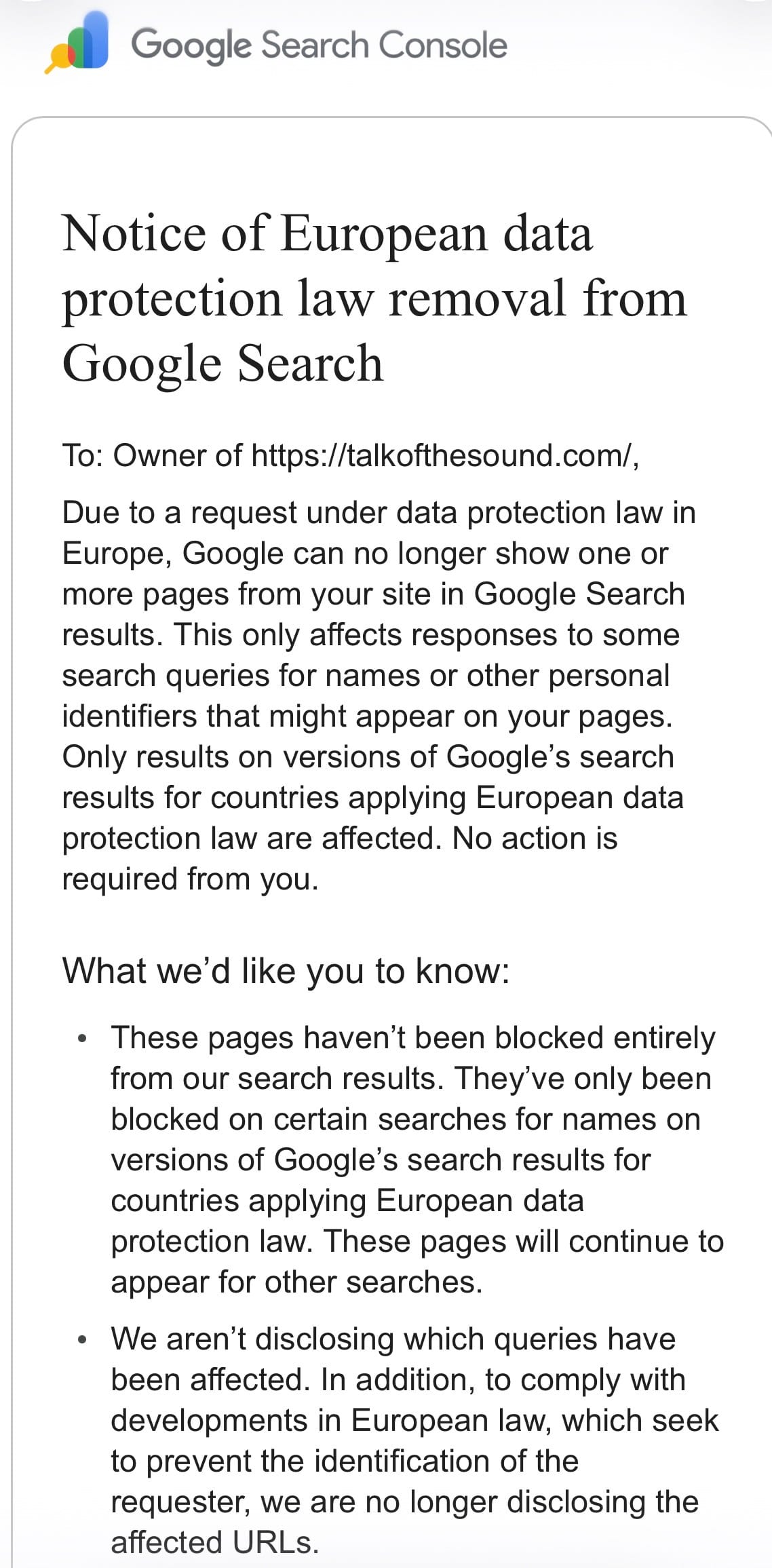
That is not unique to this case. It is Google’s standard practice.
As a result, publishers are informed that action has been taken against their reporting while being denied the information necessary to understand what happened or why.
Conducting an Investigation Into Google’s Secret Decision
Google’s refusal to identify the affected reporting left Talk of the Sound with only one option: conduct its own investigation.
The publication examined Google search results from Ireland, where the notice would be expected to have practical effect.
Rather than relying on a single search, Talk of the Sound tested numerous combinations.
Among them, searches were conducted using the names Dawn Warren and Adam Salgado. Those searches were then compared with searches using article headlines, distinctive phrases from the reporting, and other terms likely to identify the same articles without relying solely on the individuals’ names.
The results were revealing.
Searches using the individuals’ names — Dawn Warren and Adam Salgado — produced materially different results from searches using article titles and other identifying phrases. That pattern is consistent with Google’s description of European “right to be forgotten” removals, which typically affect searches for an individual’s name rather than removing content from the internet altogether.
Talk of the Sound then broadened its testing by examining unrelated reporting to determine whether another investigation appeared to have been affected.
Nothing comparable was found.
None of those searches could conclusively identify the affected article because Google’s policy deliberately prevents publishers from knowing what has been delisted.
Taken together, however, the search results led Talk of the Sound to conclude that the notice most likely relates to reporting concerning New Rochelle officials Dawn Warren and Adam Salgado.
Google possesses the information necessary to confirm or refute that conclusion but, as a matter of standard practice, does not disclose it.
The Timing
The timing is notable.
The notice arrived as the federal defamation lawsuit filed by Warren and Salgado finally moved beyond nearly a year devoted almost entirely to procedural issues concerning service of process.
Earlier this month, U.S. District Judge Jessica G. L. Clarke denied Robert Cox’s motion for reconsideration on the service issue and referred the case to a magistrate judge for discovery and other pretrial proceedings.
Another part of the chronology is also significant.
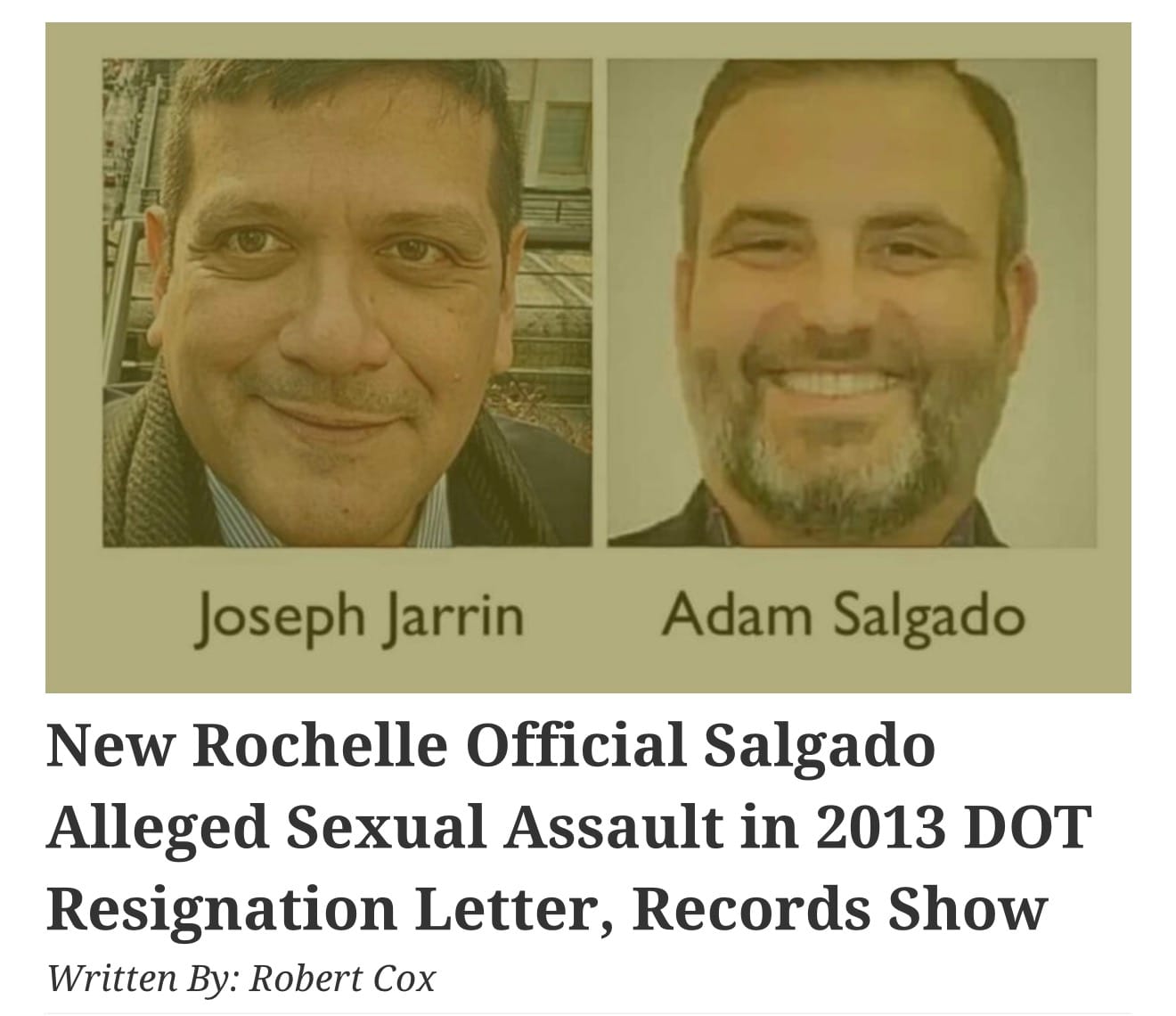
Talk of the Sound published the first of two stories concerning sexual assault allegations involving Salgado on July 7.
On July 8, Plaintiffs’ attorney Michael D. Cilento wrote to Judge Clarke noting that Cox had “continued publishing about Plaintiffs and the subject matter of this action” and asserting that those publications underscored the need to move the case forward.
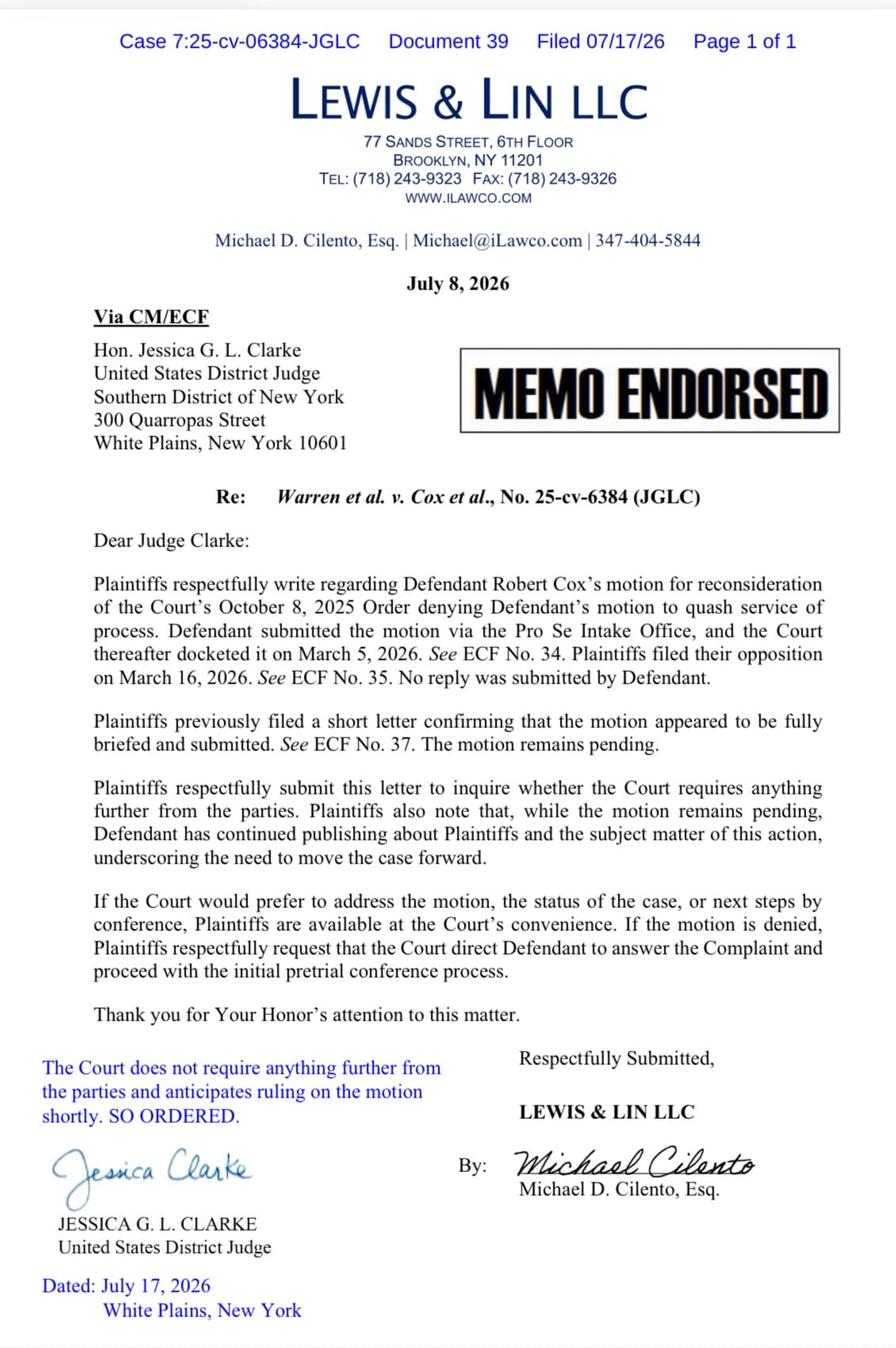
Whether those events are connected to Google’s notice is something only Google and the requester—if they are not the same party—know.
Google’s policies leave publishers unable to know.
Why This Matters
This is not principally a story about website traffic. It is a story about transparency, accountability and press freedom — or the lack thereof in Europe.
The reporting believed to be at issue concerns public officials, allegations involving public officials, court proceedings and matters of public concern.
Yet Google’s process leaves the publisher unable to determine precisely what reporting was affected, who requested the delisting, what evidence was submitted in support of the request, what legal analysis was applied or whether Google’s reviewers were made aware of the continuing public interest in the reporting.
No meaningful review process can exist when the publisher is not even told what decision is being asked to challenge.
A One-Sided Process
European privacy law attempts to balance individual privacy rights against freedom of expression and the public’s right to know.
Whether that balance is correctly struck in any particular case is open to debate.
What is far more difficult to defend is a process in which one side knows everything while the other knows almost nothing.
- The requester knows what articles were challenged.
- Google knows what articles were challenged.
- Google knows the reasons given.
- Google knows the legal analysis it applied.
- The publisher knows only that something happened.
That leaves investigative journalists attempting to reverse-engineer Google’s decision by performing search experiments, comparing search results, testing article titles against names and trying to infer what has occurred from scattered clues.
No publisher should have to investigate Google’s decision simply to discover which of its own articles may have been affected.
If a publisher is entitled to notice that action has been taken, fundamental fairness suggests the publisher should also receive enough information to understand the action and, where appropriate, seek meaningful review.
Until that changes, Google’s standard practice will continue to place investigative journalists in the extraordinary position of having to investigate Google’s secret decisions while Google declines to say what those decisions actually were.
This is to say nothing of why European law would preclude reporting on public officials by name.
This article was prepared with the assistance of AI tools under the direction and editing of Robert Cox.
Have information about this story? Email robertcox@talkofthesound.com (preferred) or contact via WhatsApp: +353 089 972 0669.
RELATED
New Rochelle Official Salgado Alleged Sexual Assault in 2013 DOT Resignation Letter, Records Show (7/22/2026)
New York DOT Records Confirm Salgado Discrimination Complaint Against Ex-Supervisor Jarrin (7/7/2026)
The New Rochelle Thimblerig — Part I (10/28/2024)
New Rochelle Authorizes Unlimited Funding of Private Lawsuit to Suppress Reporting by Local Journalist (12/11/2024)
New Rochelle Officials: Sex, Drugs and Lies (5/10/2025)
Six Month Anniversary: New Rochelle Legal Threats Backfire(6/2/2025)