New Rochelle Taxpayers Billed $57,547.59 for Officials’ Defamation Lawsuit Against Journalist

The documented total covers only one law firm, excludes other attorneys involved in the matter and comes before any ruling on the merits
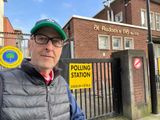
OVER THE NORTH ATLANTIC, WEST OF IRELAND (August 28, 2026) — New Rochelle taxpayers have been billed at least $57,547.59 to finance a federal defamation lawsuit brought personally by two City officials against a journalist whose reporting has examined their conduct in office.
The journalist is me.
Records produced by the City under the Freedom of Information Law show that Lewis & Lin LLC submitted 13 invoices between July 2025 and July 2026 for its representation of Corporation Counsel Dawn Warren and Development Commissioner Adam Salgado in Warren v. Cox, No. 7:25-cv-06384-JGLC, pending in the Southern District of New York.
The law firm’s account ledgers record $55,690.59 in payments and a remaining balance of $1,857 as of July 22, 2026. Several payments are expressly identified as City checks.
The $57,547.59 represents the amount documented by the records produced—not the full taxpayer cost. The City supplied no invoices or payment records involving two other attorneys or law firms that worked on or were consulted about the matter. It also withheld the City’s own checks, vouchers, purchase orders and payment authorizations.
The case has not reached the merits. Most of the litigation to date has concerned service of process and a default that was subsequently vacated.
Warren and Salgado Are the Clients; the City Pays
The May 23, 2025 Lewis & Lin engagement agreement identifies Warren and Salgado—not the City of New Rochelle—as the firm’s clients. Both signed the agreement May 27 using their City email addresses.
The agreement states that Lewis & Lin represents them “in connection with a defamation lawsuit to be filed against Robert Cox, and any other matters that may arise.”
It provides that invoices must be paid within 30 days and makes the clients responsible for paying the firm’s fees and expenses. No advance retainer was required. The disclosed hourly rates range from $210 for paralegals to $525 for partners and attorneys serving as counsel.
The invoices, however, identify City checks paying the legal bills.
The City produced no separate third-party payment agreement, indemnification agreement, litigation-funding agreement or other record explaining the relationship between the clients’ contractual payment obligation and the City’s use of public funds to satisfy it.
The City Council minutes state that the City is not a party to the lawsuit. The City is nevertheless financing the plaintiffs’ legal representation.
Billing began May 28, 2025, the day after Warren and Salgado signed the engagement agreement and more than two months before they filed their federal complaint. The latest work reflected in the production occurred June 29, 2026.
Nearly every description of the legal work performed was redacted. The invoices disclose dates, time increments, billing rates and amounts, but generally conceal what the lawyers did. The City provided no record-by-record explanation identifying the particular FOIL exemption invoked for each redaction.
A Lawsuit Authorized With Public Money
The City Council voted 5-2 on December 10, 2024, to authorize certain City employees to retain outside counsel to pursue potential defamation claims.
According to the official minutes, City Manager Wilfredo Melendez told the Council that inflammatory remarks by the writer and operator of Talk of the Sound and Words in Edgewise could harm the reputations of City employees. He emphasized that the City would not be a party to the lawsuit.
The Council nevertheless agreed to fund it.
During the meeting, Melendez recommended adding language to Resolution 2024-204 providing:
“The City has the right to recover up to 100% of legal fees from any award or settlement of a defamation suit.”
The Council adopted the proposed legislation with that revision.
The discussion therefore contemplated a successful lawsuit, an award or settlement, and how the resulting money would be used to reimburse the City before Warren and Salgado received the balance.
The City did not produce the final amended version of Resolution 2024-204 containing that provision. It produced only the meeting minutes describing the amendment.
Nor did the production include any agreement or policy addressing the opposite possibility: who would bear responsibility for an adverse award, attorneys’ fees, sanctions, settlement payment or other liability arising from the litigation.
The absence of such records from the production does not establish that the City never considered those possibilities. It does establish that the City disclosed nothing showing whether it did.
The Full Cost Remains Unknown
The City’s entire production consisted of three files:
1. The Lewis & Lin engagement agreement
2. Thirteen Lewis & Lin invoices and account statements
3. The December 10, 2024 City Council minutes
No records involving the Quinn Law Firm were produced, even though I independently received correspondence from that firm concerning the matter and the firm performed related legal work for approximately three months.
No records were produced concerning attorney Michael Twomey. The Council minutes state that Council Member Albert Tarantino reached his position on the resolution after “discussions with an attorney.” Statements made during the public meeting identified Twomey as an attorney consulted in connection with the proposal.
The City produced no engagement documents, invoices, communications or payment records involving either Quinn or Twomey.
It also produced no emails, text messages or other communications—none—despite a request covering communications among City officials, outside attorneys, Warren, Salgado, insurers and risk-management representatives.
The funding resolution, engagement of counsel, preparation and filing of the complaint, payment of invoices and conduct of more than a year of federal litigation necessarily involved a series of governmental and legal decisions. The City’s response does not say that no responsive communications exist. It does not identify communications withheld as privileged or otherwise exempt. It simply did not produce them.
FOIL Appeal Seeks an Accounting
I filed an administrative appeal August 26 challenging the City’s response as substantially incomplete.
The appeal asks City Manager Melendez to direct a further diligent search covering all nine categories in the original request. It specifically seeks:
* Records involving the Quinn Law Firm and Michael Twomey
* City checks, vouchers, purchase orders and payment authorizations
* Responsive emails, text messages and other communications
* The final adopted version of Resolution 2024-204
* Records concerning implementation of the City’s cost-recovery provision
* Any insurance, risk-management, reimbursement or litigation-funding records
* An itemized accounting of records withheld or redacted, together with the specific statutory exemption claimed for each
The City’s response referred generally to Public Officers Law § 87(2), the subdivision containing FOIL’s various exemptions. It did not identify which exemption applied to any particular redaction or withheld record.
If the appeal does not produce the missing records or an adequate legal explanation for withholding them, I will consider commencing another proceeding under Article 78 of the New York Civil Practice Law and Rules to compel disclosure.
This dispute follows two other Article 78 matters and 25 administrative appeals arising from my efforts to obtain public records from New Rochelle governmental bodies.
A Circular Dispute Over Public Records
The latest records dispute has a circular quality.
Warren and Salgado’s defamation complaint alleges, in substance, that my reporting was motivated partly by dissatisfaction with the City’s handling of my FOIL requests. Their lawsuit challenges reporting about their alleged on-the-job conduct and fitness for public office and seeks damages, deletion of published articles and an injunction restricting future publication.
After the City agreed to finance that lawsuit, I filed another FOIL request to determine how the funding arrangement was implemented, what it has cost taxpayers and what financial exposure the City accepted.
The City’s partial response has now produced another FOIL appeal. If the missing records remain unavailable, the taxpayer-funded lawsuit arising partly from disputes over access to public records may generate still more litigation over access to public records.
For now, only one number can be stated with certainty: Lewis & Lin billed $57,547.59 through June 2026.
The actual cost to New Rochelle taxpayers remains unknown.
This article was prepared with the assistance of AI tools under the direction and editing of Robert Cox.
Have information about this story? Email robertcox@talkofthesound (preferred) or contact via WhatsApp: +353 089 972 0669.